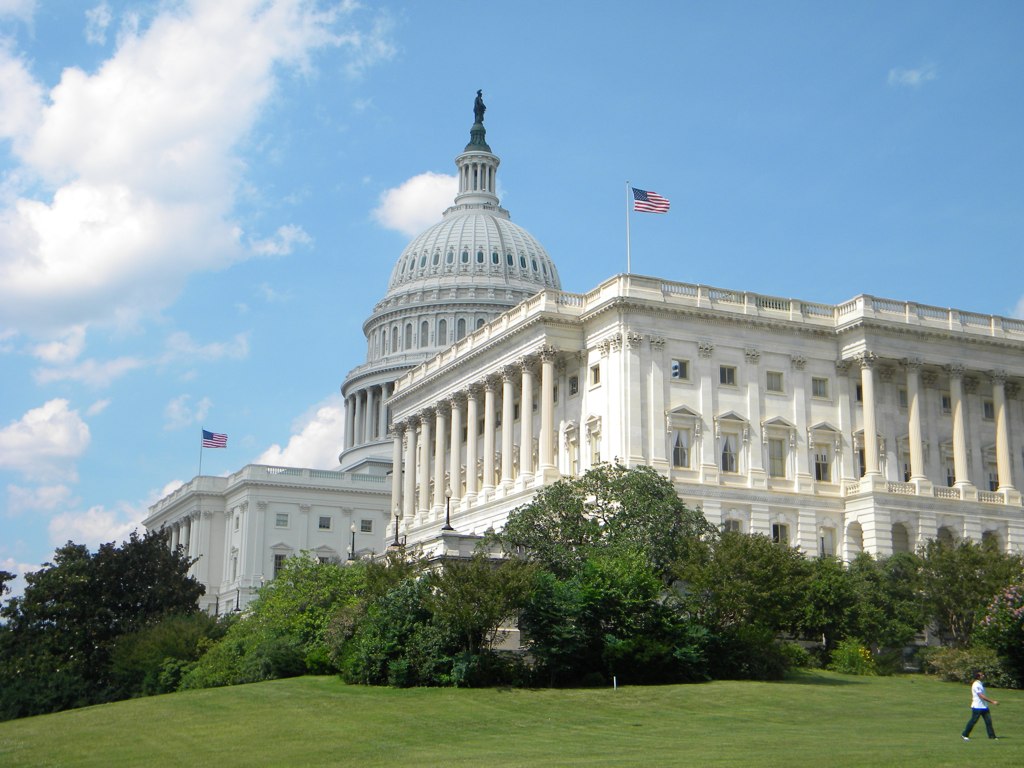
Photo: "US Capitol Building" by ttarasiuk, BY via Openverse
Democrats Keep Dropping Out of Deep-Red Senate Races — Here's the Strategy Behind It
Democratic Party officials are encouraging one-on-one matchups against Senate Republicans in states Democrats can't otherwise win outright — and the same play is now surfacing in four states at once.
In Nebraska, independent Dan Osborn's campaign against GOP Sen. Pete Ricketts got a boost this month when Democratic nominee Cindy Burbank dropped out and had her name removed from the ballot. The move echoes a result Democrats can point to directly: two years ago, Osborn came within 7 points of beating Republican Sen. Deb Fischer even as Donald Trump carried Nebraska by 21 points. In Idaho, Democratic nominee David Roth dropped out Tuesday, clearing a one-on-one race for independent Todd Achilles against Republican Sen. Jim Risch, who is seeking a fourth term. Democrats are now pushing the same move in Montana, where they're calling on Alani Bankhead to exit so independent Seth Bodnar can face Republican nominee Kurt Alme directly, and in South Dakota, where they want Julian Beaudion to step aside for independent Brian Bengs against GOP Sen. Mike Rounds.
Not every candidate is going along with it. Bankhead has resisted calls to drop out in Montana, and even if she agreed, the maneuver wouldn't be as simple as leaving the ballot blank — a spokesperson for Montana Secretary of State Christi Jacobsen said state law would require Democrats to find another candidate to replace her rather than exit the race altogether. That's a structural complication the Nebraska and Idaho versions of this tactic didn't have to clear, since Burbank and Roth were both able to withdraw and leave their independent counterparts as the sole alternative to the Republican nominee.
Democrats frame the trade as a win-win: even if the independent candidates ultimately lose, they argue the resulting one-on-one races could spook Republicans into diverting money away from safer, competitive contests just to defend seats in deep-red territory. That's the party's own stated rationale, not an independent projection of outcomes — whether pulling GOP resources toward Nebraska, Idaho, Montana or South Dakota actually happens depends on whether Republicans read those races as close enough to warrant the spending, something that hasn't been established yet. What is established is the mechanics: two withdrawals have already gone through, one is being resisted, and one is complicated by a state law that doesn't allow a candidate to simply disappear from the ballot — meaning the tactic's replication across states isn't uniform even where the political logic is the same.
If the Nebraska precedent is the evidentiary anchor Democrats are leaning on — a 7-point race in a state Trump won by 21 — then the open question the other three states pose is whether an independent needs that specific kind of pre-existing strength to make a one-on-one matchup worth the trade, or whether removing the Democratic nominee is enough on its own to manufacture it.